
Company
24 Mar 2023
By Jambo Team
Published on 21 Aug 2026

Jambo Team
Look at the device you are reading this on. You probably trust it with your bank account, your private conversations, and your entire schedule.
We like to imagine that the technology running our modern world was carefully designed by serious professionals in pristine, sterile laboratories. We assume everything was built with a grand, logical master plan.
The reality? The digital world is held together by caffeine, sheer laziness, duct tape, and complete absurdity.
The tools you use every single day—the networks you connect to, the tests you pass to prove you are human, the words we use when things break—were often born from weird accidents or hilarious shortcuts. If you pull back the curtain on tech history, the illusion of "serious science" shatters instantly.
Here are seven facts that sound like made-up internet gossip—but every single one of them is 100% true.
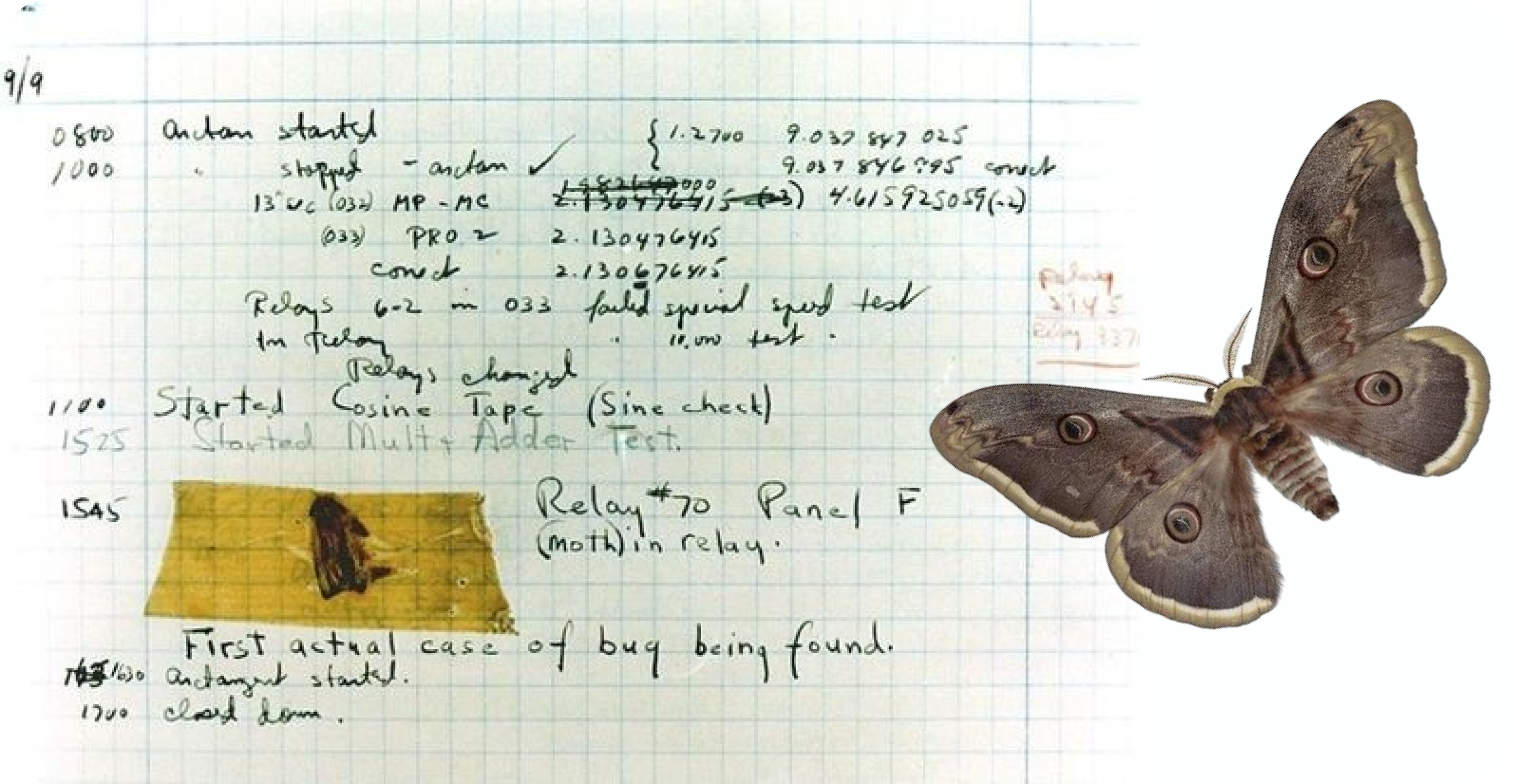
In September 1947, engineers at Harvard were troubleshooting the Mark II computer when they found the problem: a moth, trapped inside a relay. They taped it into the logbook and wrote, "First actual case of bug being found." The term "debugging" was never the same.
In 1991, researchers at Cambridge University were tired of walking to the break room only to find an empty coffee pot. Their solution: point a camera at it and stream the feed on the office network. The world's first webcam wasn't built for security or video calls — it was built for coffee.

Despite what you may have heard, "Wi-Fi" is not short for "wireless fidelity." The name was invented by a branding agency in 1999, because "IEEE 802.11b Direct Sequence" was a terrible marketing phrase. It just sounds like it should mean something.

The Apollo Guidance Computer processed about 40,000 instructions per second, had just 2,048 words of erasable memory (RAM) — about 4KB.
Your phone's processor ticks along at over 2 GHz — tens of thousands of times faster, before you even count the memory, the camera, and the GPS.
You're reading this on a machine that makes Moon-landing hardware look like an abacus.
And the abacus would be offended by that comparison.

The first CAPTCHA was created in 2000 at Carnegie Mellon to block spam bots. Two decades later, AI solves these tests in milliseconds — and humans are the ones failing them. You're not proving you're human anymore; you're training the machine that will replace you. Welcome to tech.

The "visiting card" became a social ritual in 17th-century France: you'd leave a card at someone's door as a sign of respect, and they'd decide whether to return the visit.
By the 1800s, no respectable professional left home without them.
Fast-forward a few hundred years, and the ritual hasn't changed — only the format.
We still hand over our contact details at every meeting, conference, and coffee chat.
And yet, somehow, we forget where we met someone, what we talked about, and why they mattered — within weeks of shaking their hand.
We keep the card.
We lose the person behind it.

Developers store API keys, passwords, and database credentials in `.env` files because it's fast and convenient.
But those files get committed to GitHub, shared in group chats, and forgotten — sometimes for years.
It's one of the most common ways real secrets leak online.
The fix sounds boring but matters: secrets should be injected directly into a program's memory when it runs — never stored as plaintext on disk in the first place.

Technology is full of little truths that sound like lies. The good news? Some of us build tools based on them. 😉
We're Jambo.Team — we build tools from the weird, everyday problems behind facts like these.
If "I kept the card but lost the person" sounds familiar, Kumbuka keeps the context of every connection — where you met, what you promised, what mattered.
And if plaintext secrets keep you up at night, RunEnv makes sure your keys never touch disk in the first place.
24 Mar 2023

3 Jul 2026

17 Jul 2026